Nobel Laureate Steven Chu Warns Climate Crisis Is a 'Titanic' Battle that Demands Urgent Change in Course
A+ / A-
(Prof. Steven Chu, is a foreign member of the Chinese Academy of Sciences. This story was first published on December 23, 2025 on NUS News.)
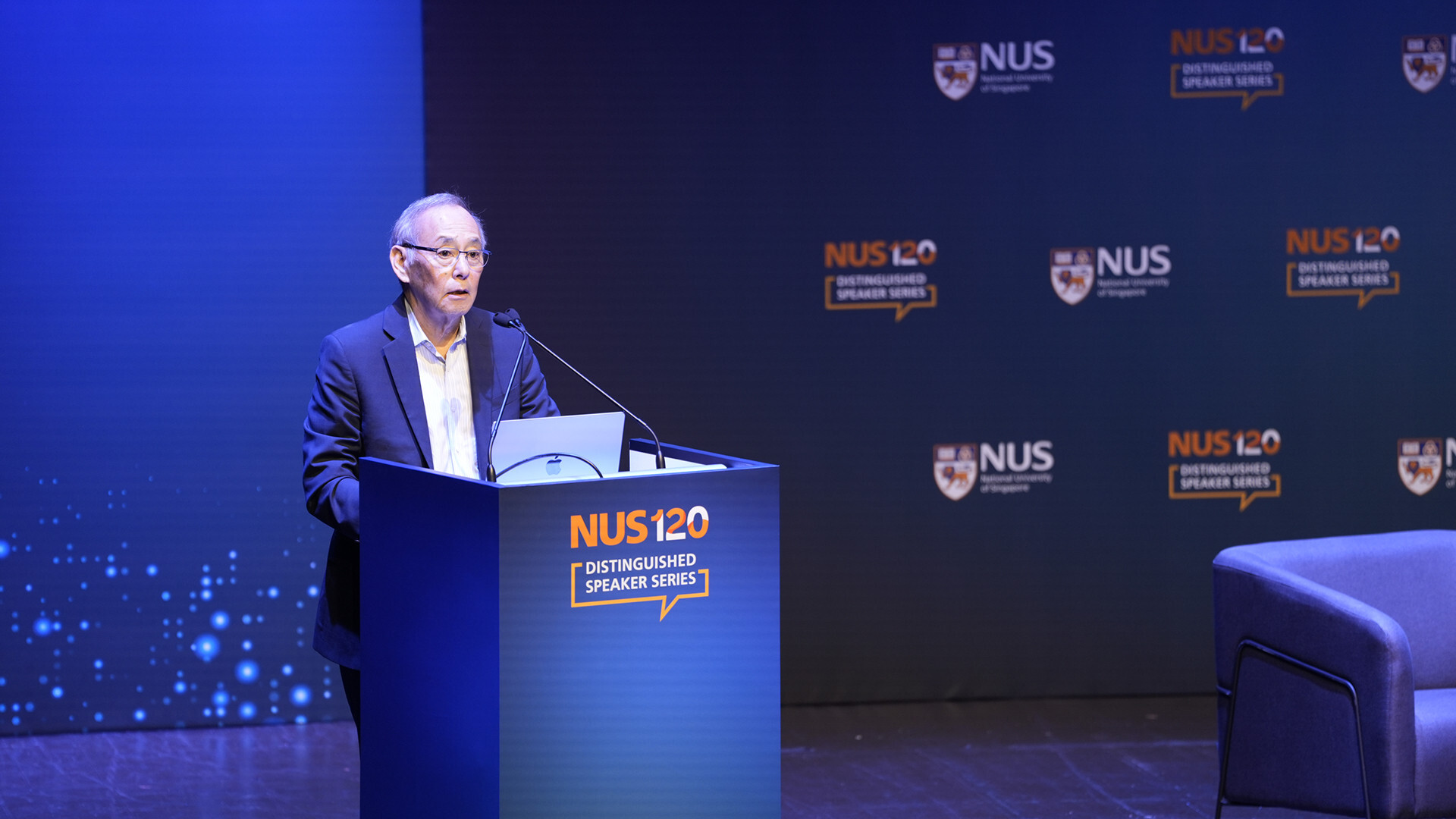
Nobel laureate and former US Secretary of Energy Professor Steven Chu warned that only a decisive shift away from fossil fuels and stronger international cooperation can make a meaningful impact in reducing the world's greenhouse gas emissions.
Like the ocean liner Titanic, which sank in 1912 after striking an iceberg, humanity is on a collision course with catastrophe. But unlike the Titanic crew who tried to change direction, many in the world remain indifferent to the worsening climate crisis, said Professor Steven Chu, a 1997 Nobel laureate in Physics and former United States Secretary of Energy.
"We haven't even slowed the ship down in terms of greenhouse gas emissions," noted Prof Chu, who currently serves as Professor of Physics, Molecular and Cellular Physiology, and Energy Science and Engineering at Stanford University.
He drew the chilling parallel during his keynote lecture at the NUS University Cultural Centre Theatre on 11 Dec 2025. Speaking to about 200 attendees, including students, staff, faculty, alumni, and members of the public, he laid out not only the challenges facing the planet but also the opportunities that could help avert disaster.
The lecture, moderated by NUS Vice President (Sustainability and Resilience) and Chief Sustainability Scientist Professor Koh Lian Pin, is part of the NUS120 Distinguished Speaker Series. It is among a line-up of events to mark NUS' 120th anniversary.
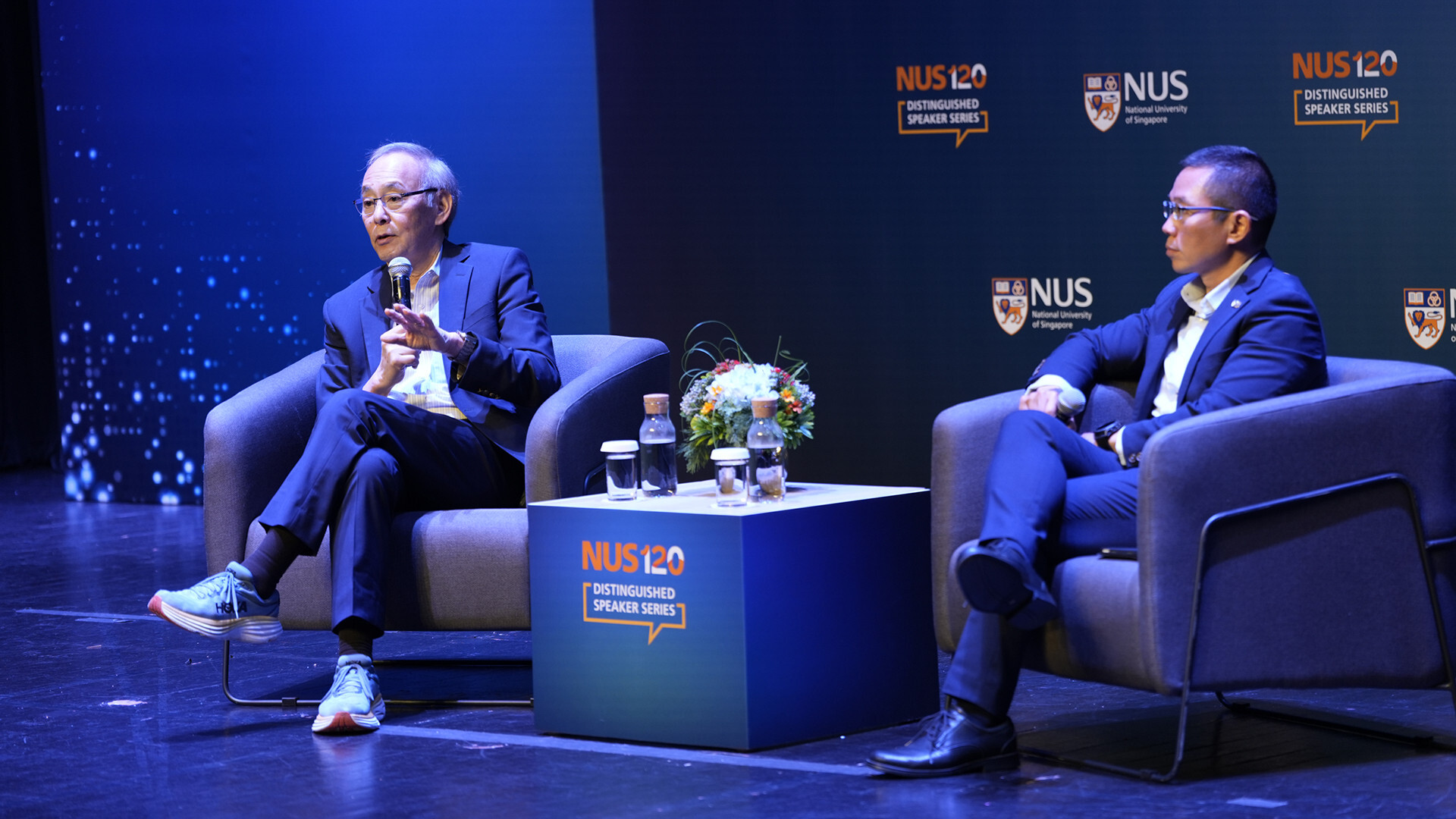
Moderated by NUS Vice President (Sustainability and Resilience) and Chief Sustainability Scientist Professor Koh Lian Pin (left), the Q&A session saw Prof Chu (right) discussing his time at American research and development firm Bell Labs, the pathways for industrial decarbonisation, and the role of AI and automation in boosting productivity for resource-constrained economies.
Steering away from fossil fuels
Prof Chu opened the lecture with troubling data: global temperatures have already exceeded the 1.5 deg C threshold set by the Paris Agreement, with current trajectories pointing to a 3 deg C increase by the end of the century.
More alarmingly, much of the warming is "baked into the system", as 90 per cent of additional heat trapped by greenhouse gases is absorbed by the oceans, with 40 per cent sinking into deep waters that will take decades or even centuries before people feel its effects.
Beyond rising temperatures, Prof Chu highlighted how climate change threatens global stability through agricultural collapse and the potential displacement of millions. By 2050, there could be 200 million climate refugees — a humanitarian crisis that would dwarf current migration challenges and push nations towards extreme political unrest.
To deviate from this dangerous course, one approach is to shift away from fossil fuels, which has become a more viable option thanks to technological breakthroughs.
China, for instance, is leading in wind turbine innovation, developing massive 25-megawatt turbines with blades of over 300m in diameter to boost clean energy production. Meanwhile, California has expanded its large-scale battery storage capacity to nearly 16 gigawatts, achieving 70 per cent carbon-free electricity for the state.
Even less widely adopted sources like nuclear energy are gaining traction, Prof Chu noted. Small nuclear reactors promise reliable carbon-free baseload power, while being safer and less land-intensive. This could be promising for smaller nations, he added in response to a question from the floor on nuclear viability for resource-constrained nations.
Change does not appear overnight
The need to continually push the boundaries of science remains pertinent.
During the Q&A session, Prof Chu reflected on his time at American industrial research and development company Bell Labs, where he and his colleagues pursued what he called a "random walk in science"— serendipitous exploration of ideas across different research areas without requiring immediate commercial applications.
He urged researchers and entrepreneurs to embrace this approach, reminding them that genuine breakthroughs rarely follow a straight line.
"There are new ideas flying around in the air all the time… The most important thing is to look around you, find out who the smart people are, talk to them and dream," he suggested. "And when you dream, you can dream of all sorts of things that don't have an immediate business model."
Prof Chu cited nitrogen-based fertilisers that generate nitrous oxide, a greenhouse gas 300 times more potent than carbon dioxide. His laboratory at Stanford University is working to make microbes that can reliably capture nitrogen from the air and deliver it directly into plant roots, potentially eliminating the need for artificial fertilisers.
This will take sustained commitment, as an earlier prototype by another company had taken eight years to develop. But such revolutionary technologies can only emerge if people are unafraid to venture into uncertain territory.
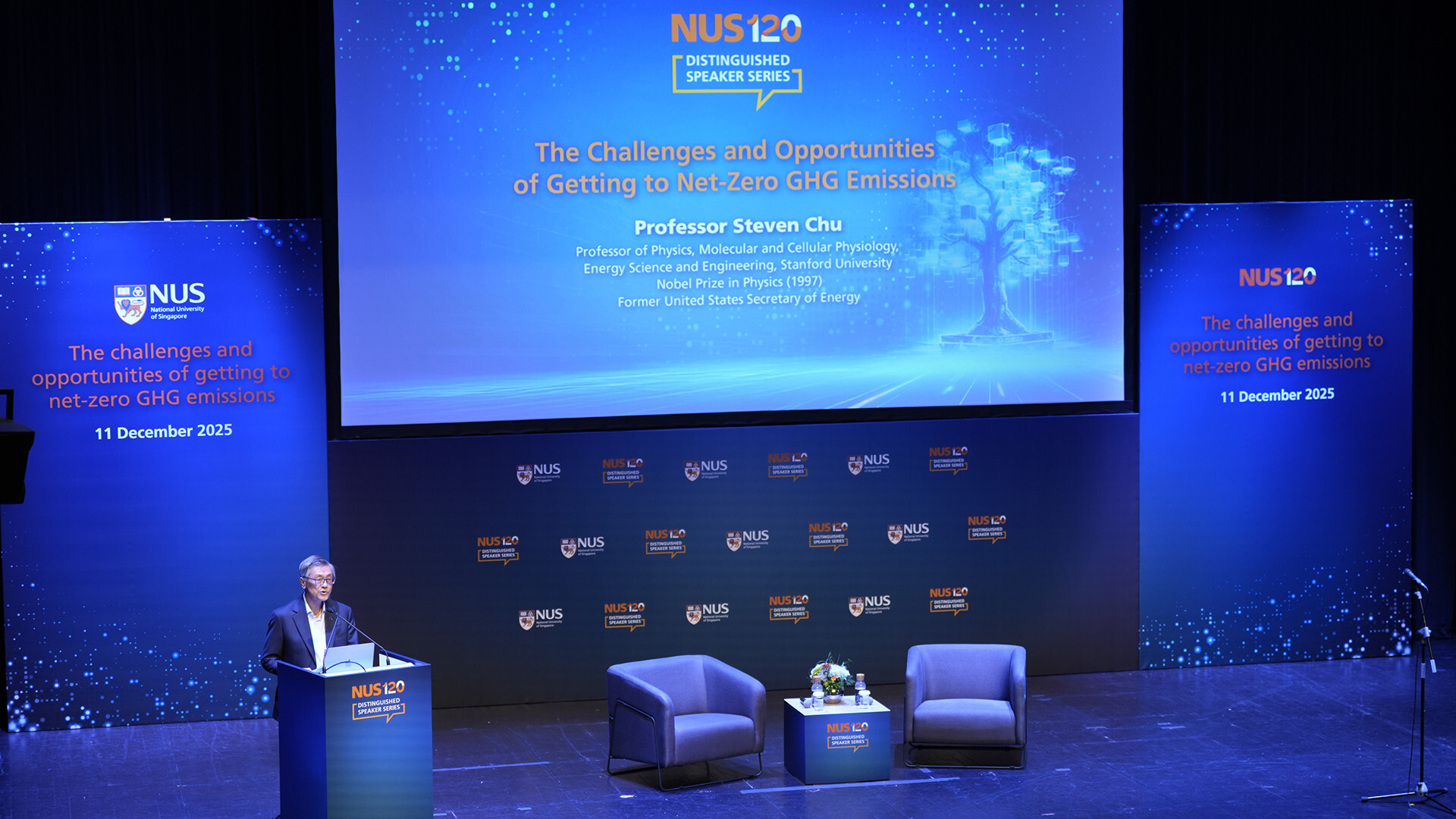
In his opening remarks, NUS President Professor Tan Eng Chye affirmed the University's commitment to sustainability, citing its interdisciplinary research efforts in areas such as clean energy, heat resilience and green buildings.
Cooperation across borders remains key
With technological solutions, from cheap renewables to advanced energy storage, at our disposal, the question is not so much whether we possess the tools to avoid catastrophe, but whether we will deploy them at sufficient scale and speed.
Prof Chu stressed that long-lasting, systemic solutions require international cooperation, citing proposals to connect the electrical systems of resource-constrained countries with those of resource-abundant ones.
He added that 2080 might be a more realistic target for achieving net-zero emissions — only if the international community works together with extra urgency.
Delivering the opening remarks, NUS President Professor Tan Eng Chye underscored that "the mission to recalibrate the future of our planet is one that involves all of us," stressing the importance of collective learning and action.
Prof Chu concurred, "The world needs to come together. We have the technology, we have the knowledge. What we need now is the will to act — before it's too late."
Copyright © 2002 - Chinese Academy of Sciences
 15 Zhongguancunbeiyitiao Ave., Haidian District, Beijing 100190, China
 86-10-5935-8373(O) 5935-8300(Fax)


 中文
中文

 中文
中文


